The New Threat Level: What 345 Park Avenue Revealed About Office Security
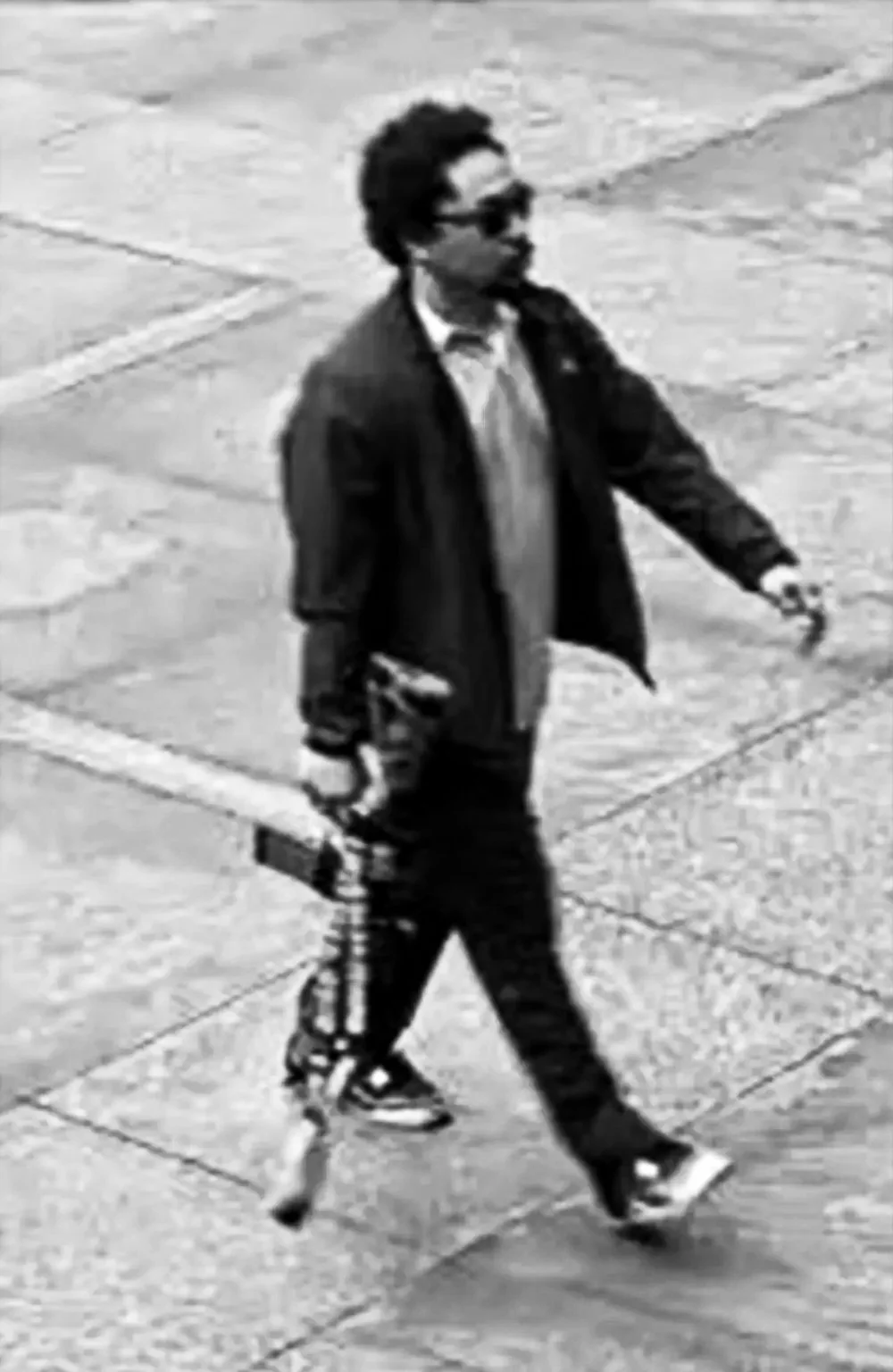
On Monday, July 28, 2025, the unthinkable unfolded in Midtown Manhattan. Surveillance cameras captured Shane Devon Tamura, 27, stepping out of a double-parked BMW on Park Avenue and crossing the plaza toward 345 Park Avenue, an M4 assault-style rifle in hand, visible from every direction, banned under New York State law, and entirely unimpeded. Within minutes, four people were dead. It was the deadliest mass shooting in New York City since 2000.
The last time New York saw carnage at this scale was the Wendy's massacre, carried out with a handgun. For decades, the handgun represented the dominant threat profile for offices, public spaces, and corporate security planning. Concealable. Limited magazine capacity. Devastating, but manageable within a known range of protective solutions. A UL Level 1 through Level 3 ballistic barrier, the kind found in bank teller windows, reception desks, and security booths; was considered adequate for the realistic threat most buildings would ever face.
July 28th changed that.
A Weapon Built to Defeat Light Cover
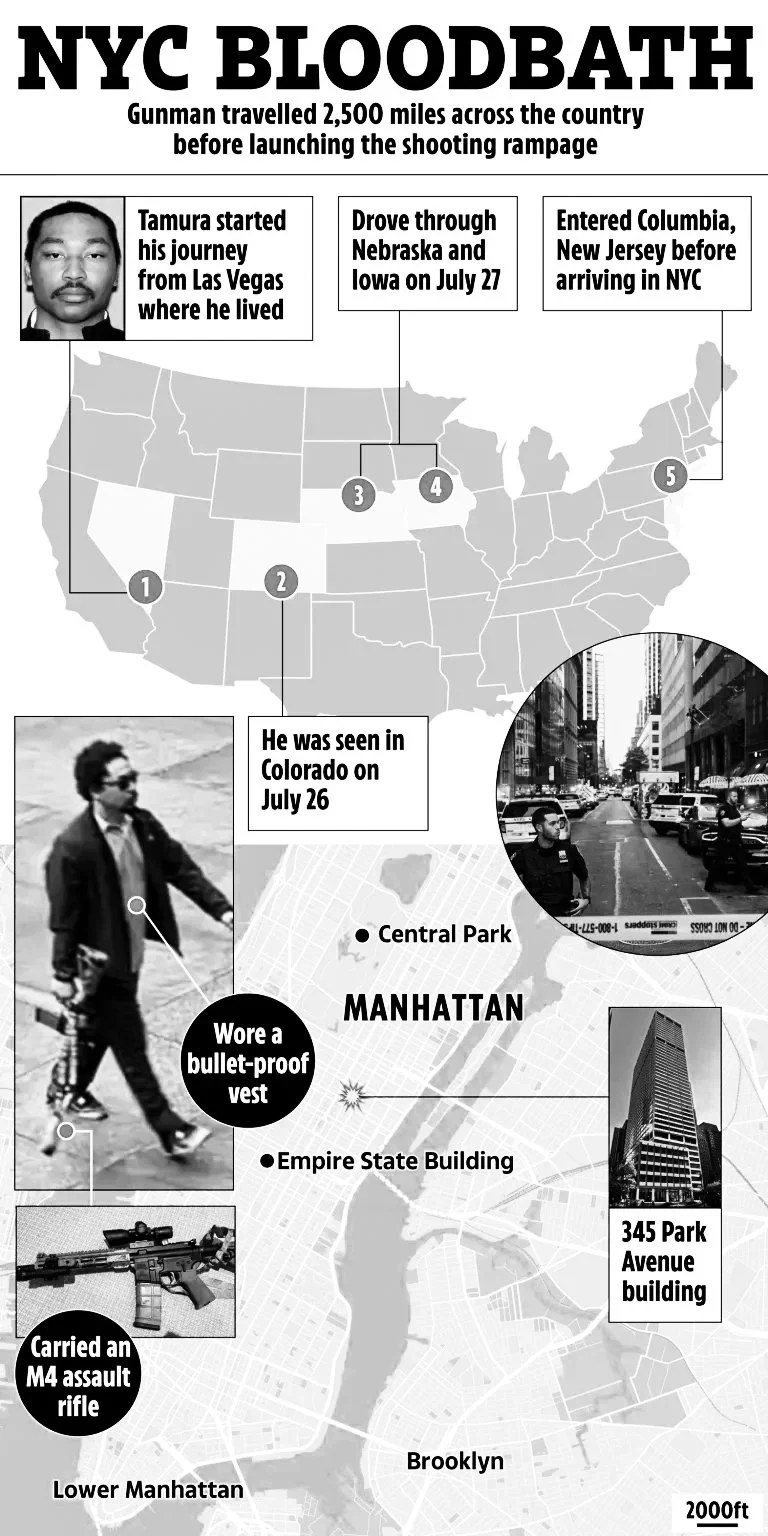
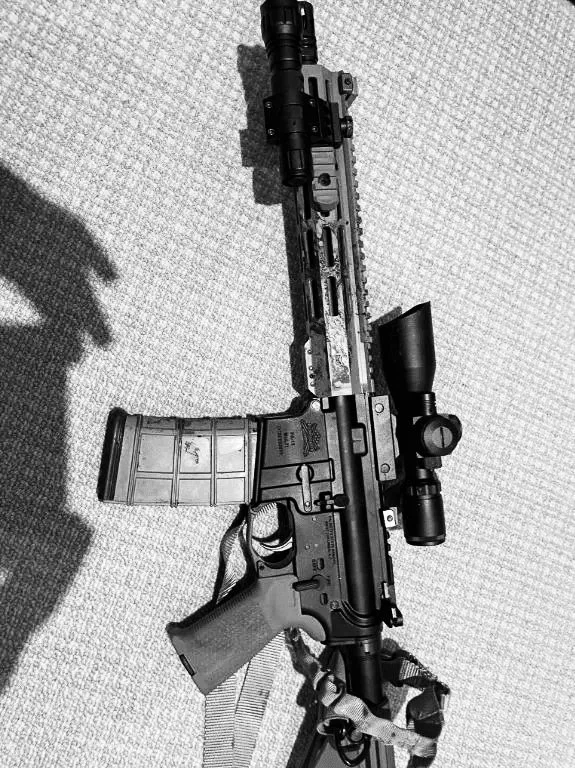
Tamura entered the lobby of 345 Park Avenue carrying a Palmetto State Armory AR-15 style rifle chambered in .223 caliber, 500 rounds of which, law enforcement confirmed, he had deliberately acquired in the weeks prior. He "sprayed the lobby with gunfire," NYPD Commissioner Jessica Tisch said, killing Officer Didarul Islam, Blackstone executive Wesley LePatner, and security guard Aland Etienne before taking an elevator to the 33rd floor.
The .223 round is not incidental to this story. It is one of the most widely available centerfire rifle cartridges in the United States, and it was specifically engineered for barrier penetration. It will defeat standard interior drywall as though it isn't there. It passes through car doors. It renders soft body armor at many protection levels functionally inadequate. Protecting against multiple hits from this round requires a UL Level 7 or Level 8 solution — the kind of protection rarely found outside military installations, government facilities, or purpose-built security infrastructure.
Heroism Is Not a Ballistic Solution
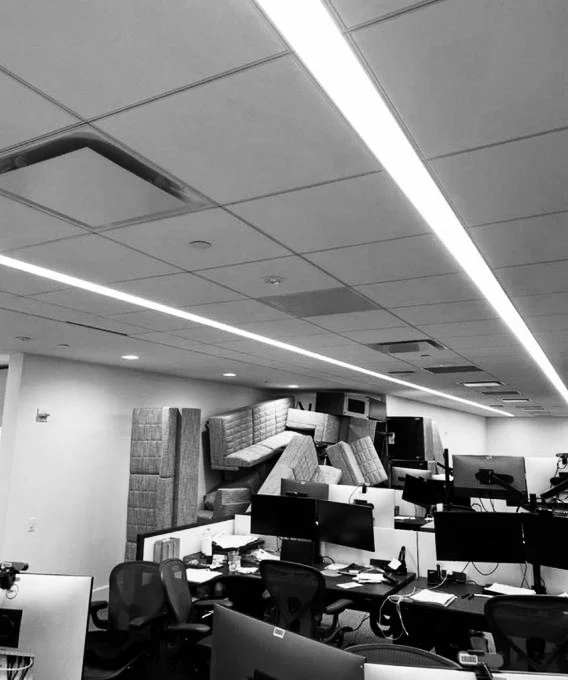
One image from that night spread across Wall Street social media almost immediately: a towering barricade of office chairs and couches, piled floor to ceiling against a door inside Blackstone's headquarters. The employees who built it were, without question, acting with courage, clarity, and instinct under unimaginable pressure.
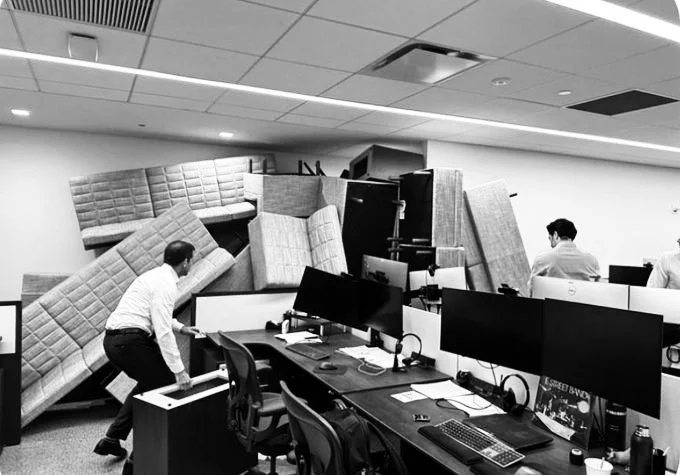
But in the face of an M4 and .223 ammunition, that barricade was concealment, not cover. There is a critical distinction between the two. Concealment hides you. Cover stops bullets. Upholstered furniture, thin wood, plastic chair frames: none of these register as meaningful obstacles to a .223 rifle round. As one security expert noted in the aftermath, Monday's incident, and particularly that photograph, "sparked a lot of people saying, well, how else can we protect our own employees? Like, where can they go? What can we do for them?"
The Blackstone employees did everything right within the limits of what they had available. The problem is what they had available.
What Actually Worked — And What It Cost
On the 33rd floor of 345 Park Avenue, Rudin Management, the building's owner since it was developed by the Rudin family and opened in 1969, had installed something far more substantive: bathrooms designed as ballistic safe rooms, outfitted with bulletproof doors that bolt from the inside, Kevlar-lined walls, interior camera feeds showing the hallway outside, and dedicated telephone lines.
New York City Mayor Eric Adams credited those rooms with playing "a major role in not having a greater loss of life," adding that "there were many things that Rudin Management put in place to make their tenants safe."
These rooms, described as "a critical layer of protection during active threats" that allow employees to shelter safely while first responders are alerted in real time, are rare. Rudin had the foresight to install them, but most commercial office buildings in America have nothing comparable. Within a week of the shooting, hundreds of companies were seeking similar solutions. One security firm reported already consulting on safe room build-outs for a dozen companies who had reached out in the days following the attack.
The demand is real. The gap is enormous.
The Weight Problem, And the Solution That Changes It
Traditional ballistic protection, Kevlar panels, steel plate, fiberglass composites, is heavy, expensive, and disruptive to install. A Kevlar wall solution may require a five-person crew. steel is heavier still. Neither is practical for retrofitting existing commercial office space at scale, and both carry the psychological weight of turning a workplace into something that feels like a fortress.
This is where the material landscape has fundamentally shifted. Ultra-high-molecular-weight polyethylene (UHMWPE), the same polymer family underlying modern ballistic armor, offers protection comparable to Kevlar at roughly one-quarter the weight. It can be fabricated into wall panels that install with a two-person crew. It does not disrupt the aesthetic of a modern office. It does not announce itself. Employees work in front of it without knowing it's there. The office does not feel like a prison.
With the return-to-office initiative gaining meaningful speed across corporate America, organizations are investing significantly in the physical workplace, in amenities, design, and the employee experience. It only makes sense to extend that investment to the one dimension that, until July 28th, most companies had never seriously contemplated: what happens when the threat is a rifle, not a handgun, and the nearest first responder is still minutes away.
A Shift That Cannot Be Undone
The shooting at 345 Park Avenue did not reveal a flaw in any one company's security posture. It revealed a systemic gap across an entire asset class, the American commercial office building; that was designed, secured, and operated around a threat profile that no longer reflects reality.
Samuel Fish, a security consultant, put it plainly: the landscape has changed in the last 20 years "as workplace shootings have become increasingly random, and the agendas of the perpetrators increasingly disconnected from reality."
Tamura drove 2,500 miles from Las Vegas with 500 rounds of .223 ammunition and a purpose-built rifle, walked across a public plaza in broad daylight, and killed four people in under two minutes. The photo of stacked office chairs will endure as a symbol of that day, a testament to human courage, and a stark reminder of what courage alone cannot stop.
The solution is not to make employees braver. It is to make the walls around them stronger, invisibly, efficiently, and now.
Iten Defense manufactures NIJ and UL 752-tested UHMWPE ballistic panels for commercial, institutional, and defense applications. Panels are available across protection levels and are engineered for retrofit installation in existing structures.
To learn more about ballistic threat products and security solutions, feel free to contactL Matthew Borowiak, mborowiak@itendefense.com